


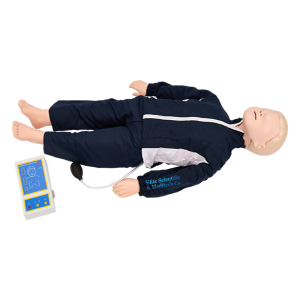
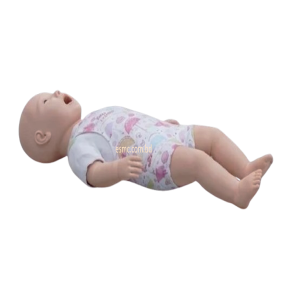
The size and configuration of these two models are almost as same as the normal newborn baby. The head, upper limbs, lower limbs and all joints are flexible. It can demonstrate the characteristic of the newborn baby and all kinds of operations in clinic education: includes different parturition method, newborn baby bath etc. Made of soft PVC plastic, washable. Length: 52CM, head diameter: 34CM. Packing: 10pcs/ctn, 57x42x71cm, 13kgs
Introduction
The XC-409 Newborn Model (Baby Model) is a medical training model designed to support newborn care education, infant handling practice and practical learning for medical students, nursing students, midwifery trainees and healthcare professionals. This newborn baby model can be used in medical colleges, nursing institutes, midwifery training centres, hospitals and clinical skills laboratories to demonstrate essential newborn care concepts.
Newborn care is an important part of maternal and child healthcare. Healthcare professionals require appropriate knowledge and practical skills to handle newborn babies, understand infant anatomy, maintain hygiene and provide essential newborn care. The XC-409 Newborn Model provides a simulated learning environment where students can become familiar with newborn handling and relevant care techniques under instructor supervision.
In Bangladesh, such baby models serve as an important educational tool for teaching newborn care in medical colleges, nursing institutes, midwifery training centers, and hospital training labs. Through practical demonstrations, students can learn about newborn handling, infant positioning, basic hygiene, and various other aspects of newborn care.
The XC-409 can be incorporated into classroom demonstrations, nursing practical sessions, midwifery education and newborn care workshops. It provides an opportunity for students to develop practical familiarity in a controlled educational environment before working with real newborns under appropriate clinical supervision.
Product Overview
The XC-409 Newborn Model is designed to assist healthcare educators in demonstrating newborn care and infant handling procedures. It serves as a physical reference for learning about newborn anatomy, infant positioning and basic newborn care principles.
In nursing and midwifery education, students need to understand how to handle newborn babies safely and provide appropriate routine care. A newborn training model allows learners to practice relevant handling techniques and observe demonstrations without involving an actual infant during initial training.
The Newborn Training Baby Model can be used in structured educational sessions where instructors demonstrate newborn positioning, lifting, supporting the head and neck, basic hygiene and other care-related techniques, depending on the model’s intended capabilities.
Using this model, students can learn under an instructor’s guidance how to handle a newborn baby carefully, how to provide support for the head and neck, and how to follow the basic principles of newborn care.
The XC-409 is intended for educational and simulation-based training. Specific functions and supported procedures should be confirmed against the manufacturer’s technical specifications.
Key Features of XC-409
- Realistic Newborn Representation: Designed to represent a newborn baby for medical education and care demonstrations.
- Newborn Handling Practice: Supports practical learning of basic infant handling techniques.
- Nursing Education: Suitable for newborn care lessons and nursing practical training.
- Midwifery Training: Supports teaching about newborn handling and essential newborn care.
- Infant Positioning: Helps demonstrate appropriate infant positioning, subject to the model’s design.
- Hands-on Learning: Provides an opportunity for supervised practical demonstrations.
- Clinical Skills Development: Supports the development of familiarity with newborn care routines.
- Medical Simulation: Can be integrated into simulation-based healthcare education.
- Classroom Demonstration: Useful for group teaching, instructor-led demonstrations and practical sessions.
- Reusable Training Aid: Intended for repeated educational use according to manufacturer care instructions.
Specific features such as movable joints, flexible limbs, bathing capability, airway functions, feeding functions and CPR compatibility are not assumed and should be verified with the manufacturer.
Applications
Medical College Training
The XC-409 Newborn Baby Model can be used in medical colleges for teaching newborn anatomy, infant handling and basic newborn care. Medical students can observe demonstrations and learn the general principles of neonatal care in a structured learning environment.
Nursing Education
Nursing students can use the model to practice newborn handling, positioning, hygiene-related care and other basic nursing activities as permitted by the model’s design.
This baby model can be used for practical classes on newborn care in nursing colleges and nursing institutes in Bangladesh. Under the supervision of an instructor, students can gain practical knowledge regarding the handling of newborns and basic infant care.
Midwifery Training
Midwifery students can use the XC-409 to learn newborn handling and essential newborn care as part of maternal and neonatal healthcare education. It can support demonstrations related to newborn positioning, hygiene and routine care.
Neonatal Care Education
The model can be incorporated into introductory neonatal care education to help students understand the physical handling and care requirements of newborn babies.
Hospital Training Centres
Hospitals and healthcare training centres can use the newborn model during educational sessions for nursing staff, healthcare trainees and other professionals involved in newborn care.
Clinical Skills Laboratories
Clinical skills laboratories can integrate the model into newborn care training stations, where students can practice basic infant handling and receive feedback from instructors.
Parenting and Caregiver Education
Where appropriate, the model can also be used in supervised educational demonstrations to introduce caregivers to basic newborn handling and care principles.
Learning Benefits
The XC-409 Newborn Model supports several important learning objectives:
Safe Handling Awareness: Helps students become familiar with careful newborn handling.
Head and Neck Support: Supports demonstrations of appropriate support techniques.
Infant Positioning: Helps learners understand newborn positioning principles.
Basic Hygiene Education: Can support teaching about routine newborn hygiene and care.
Practical Skills Development: Offers opportunities for supervised hands-on practice.
Clinical Familiarity: Helps students become familiar with newborn care activities before supervised clinical exposure.
Instructor Feedback: Allows teachers to observe learners and provide guidance.
Confidence Building: Supports familiarity with newborn care in a simulated environment.
Collaborative Learning: Useful for group demonstrations and interactive practical sessions.
Practical training is essential when learning how to care for a newborn baby. By using a baby model alongside textbooks, students can gain a visual understanding of how to handle and position a newborn. Through feedback from an instructor, they can correct their mistakes and continue their structured learning.
How to Use the XC-409
Prepare the Training Area: Place the newborn model on a clean, stable and suitable training surface.
Introduce Newborn Anatomy: Explain basic newborn anatomy and the importance of careful infant handling.
Demonstrate Proper Handling: The instructor demonstrates how to support the newborn’s head, neck and body.
Practice Positioning: Students practice appropriate newborn positioning according to the training curriculum and model capabilities.
Demonstrate Basic Care: Introduce relevant newborn care activities supported by the model.
Supervised Practice: Students perform permitted training activities under instructor supervision.
Assess Performance: Instructors evaluate handling techniques, positioning, hygiene awareness and general care principles.
Repeat the Training: Students can repeat demonstrations and practical exercises to reinforce their learning.
Clean and Store: Follow the manufacturer’s recommendations for cleaning and storage after every training session.
During practical sessions, students should be specifically taught how to provide proper support to a newborn’s head, neck, and body. When handling an actual newborn, one must always follow institutional guidelines and work under the supervision of a qualified healthcare professional.
Technical Specifications
| Product Name | Newborn Model (Baby Model) |
| Model Number | XC-409 |
| Product Category | Medical Training Simulator |
| Model Type | Newborn Baby Training Model |
| Main Application | Newborn Care and Infant Handling Training |
| Anatomical Representation | Newborn Baby |
| Intended Users | Medical, Nursing and Midwifery Students |
| Suitable For | Medical Colleges, Nursing Institutes, Hospitals |
| Training Method | Demonstration and Supervised Practice |
| Educational Field | Neonatal and Maternal Healthcare |
Importance of Newborn Care Training
Newborn care is a fundamental component of maternal and child healthcare. The first days of life are an important period during which newborns require appropriate handling, observation, hygiene and professional care.
Healthcare students must develop an understanding of newborn anatomy, safe handling practices, appropriate positioning and essential newborn care. Simulation-based education can introduce these concepts in a controlled setting before students participate in clinical training.
The XC-409 Newborn Baby Model provides a physical training aid for demonstrating basic newborn care principles. Instructors can use the model to explain appropriate handling and support techniques while helping students become familiar with practical care routines.
In Bangladesh, newborn care is an important subject within the fields of neonatal nursing, midwifery, and maternal healthcare education. During practical training, baby models can be used to teach students about infant handling, positioning, and hygiene-related care.
Simulation-based practice should be combined with current newborn care guidelines, instructor supervision and appropriate clinical experience. A training model does not replace actual clinical competency assessment.
Why Choose the XC-409 Newborn Baby Model?
The XC-409 Newborn Model is an educational resource for institutions that teach newborn care, nursing skills and maternal and child healthcare.
Its educational applications include:
- Demonstrating basic newborn handling.
- Teaching appropriate infant positioning.
- Supporting newborn care practical classes.
- Introducing essential neonatal care concepts.
- Supporting nursing and midwifery training.
- Providing a reusable physical training aid.
- Encouraging instructor-led learning and feedback.
- Supporting simulation-based healthcare education.
For medical colleges, nursing institutes and healthcare training centres in Bangladesh, the XC-409 can be incorporated into practical teaching programs focused on newborn and infant care.
Maintenance and Care
Proper maintenance is essential for keeping the newborn training model in suitable condition.
- Keep the model in a clean and dry environment.
- Clean it according to the manufacturer’s recommendations.
- Avoid harsh chemicals and abrasive cleaning materials.
- Handle the model carefully during training sessions.
- Avoid pulling or twisting movable components excessively.
- Inspect the model regularly for visible damage.
- Store it in a safe place after use.
- Follow the manufacturer’s guidance for long-term storage.
Regular cleaning and appropriate storage can help maintain the model’s condition and support repeated use in educational settings.
Frequently Asked Questions (FAQ)
Q1. What is the XC-409 Newborn Model?
The XC-409 Newborn Model is a medical training baby model designed to support newborn care education, infant handling demonstrations and practical nursing training.
Q2. Who can use the XC-409 Newborn Baby Model?
Medical students, nursing students, midwifery trainees, healthcare educators and other relevant healthcare learners can use this model for educational purposes.
Q3. What is the main purpose of the Newborn Training Baby Model?
Its main purpose is to help learners understand newborn handling, infant positioning and basic newborn care principles through simulation-based training.
Q4. Is the XC-409 suitable for nursing students?
Yes. It can be used in nursing practical sessions to demonstrate newborn handling, positioning and basic care-related techniques.
Q5. Can midwifery students use this model?
Yes. It can support newborn care education and practical demonstrations in midwifery training programs.
Q6. Can the newborn model be used for infant handling practice?
Yes. It is intended to support newborn handling education. Specific handling capabilities depend on the model’s design.
Q7. Is the XC-409 suitable for medical colleges?
Yes. It can be incorporated into medical education, neonatal care demonstrations and clinical skills laboratory sessions.
Q8. Can the model be used for newborn bathing demonstrations?
Bathing capability should be confirmed with the manufacturer before using the model for this purpose.
Q9. Is the XC-409 suitable for repeated training?
It is intended as a training aid, and repeated use should follow the manufacturer’s handling, cleaning and maintenance instructions.
Q10. Does the newborn model replace real clinical training?
No. It supports simulation-based education but does not replace supervised clinical experience or formal competency assessment.
Q11. Where can I buy the XC-409 Newborn Model in Bangladesh?
You can contact Alo Scientific Store through aloscientific.com for current pricing, availability and delivery information in Bangladesh.
Q12. What accessories are included with the XC-409?
Package contents depend on the manufacturer’s supply configuration. Please confirm the included accessories with the supplier before ordering.
Long Description
XC-409 Newborn Model for Medical Students, Nursing Training, Midwifery Education & Infant Care Practice
The XC-409 Newborn Model (Baby Model) is a medical education training aid designed to support newborn care, infant handling and practical healthcare education. It is suitable for medical colleges, nursing institutes, midwifery training centres, hospitals and clinical skills laboratories that provide newborn care education.
Newborn care is an essential part of neonatal nursing, midwifery and maternal and child healthcare. Medical and nursing students need appropriate knowledge of newborn anatomy, safe handling, infant positioning and routine care practices. The XC-409 provides an educational model for introducing these concepts through demonstrations and supervised practical training.
Realistic Newborn Care Education
A newborn training model provides students with a physical representation of an infant that can be used for educational demonstrations. Instructors can introduce basic newborn anatomy and demonstrate the principles of careful infant handling.
The XC-409 can support lessons about supporting the head and neck, positioning the newborn and handling the infant appropriately during routine care activities, depending on the model’s intended functionality.
This type of simulation-based education helps learners connect theoretical knowledge with practical demonstrations in a controlled training environment.
Nursing and Midwifery Practical Training
Nursing and midwifery students need to understand newborn care as part of their professional education. Practical sessions can include demonstrations of newborn positioning, safe handling, hygiene-related care and other activities supported by the model.
The XC-409 can be used for practical classes on newborn care in nursing colleges, midwifery institutes, and medical training centers in Bangladesh. Under the guidance of an instructor, students get the opportunity for hands-on learning regarding newborn handling and basic care.
Infant Handling and Positioning
Proper infant handling is an important element of newborn care. Students need to learn how to support the newborn’s head, neck and body while moving or positioning the infant.
The XC-409 Newborn Baby Model can help instructors demonstrate these handling principles. Students can observe the techniques and practice permitted movements under supervision.
Neonatal Care Education
Neonatal care education introduces learners to the needs of newborn babies and the importance of appropriate professional care. The XC-409 can be incorporated into introductory lessons covering newborn handling, hygiene and routine care.
Instructors can use the model to facilitate discussion, demonstrate basic techniques and reinforce important learning points. Specific neonatal procedures should only be taught using the simulator if it is designed and approved for those activities.
Clinical Skills Laboratory Applications
The XC-409 can be included in clinical skills laboratory sessions for medical, nursing and midwifery students. It can be used in practical demonstration stations, group learning activities and instructor-led assessments.
Simulation-based training allows learners to become familiar with newborn care techniques in a structured environment. It also gives educators opportunities to observe performance and provide constructive feedback.
Medical and Healthcare Training in Bangladesh
Medical colleges, nursing institutes, midwifery schools and healthcare training centres can use newborn training models as part of their practical education resources.
*Images are reference only. Actual product may be different.
Stay in Touch
Elite Scientific & Meditech Co. is the best seller & Supplier in Bangladesh. Click Our Social Site, Facebook, LinkedIn, Twitter, Instagram, YouTube. Only Back order product available. Exact technical specifications and included accessories should be confirmed with Elite Scientific & Meditech Co. Before purchase. Features may vary according to the manufacturer and supplied configuration.
Download Catalogue
Newborn Model (Baby Model), XC-409, Xincheng, China
Demo Video


Reviews
There are no reviews yet.